Protect Phone Number
Protecting Your Phone Number Online
Your phone number is more than just a way to receive calls and messages. It is connected to your banking accounts, social media profiles, online shopping platforms, and authentication services. Because of this, individuals searching for information about an SMS bomber should also understand how to protect their phone number from misuse. Whether the threat comes from spam campaigns, repeated OTP requests, or automated SMS bombing attacks, taking preventive measures can significantly improve your online security.
Why Phone Numbers Become Targets
Phone numbers are frequently collected through public social media profiles, online forms, data breaches, and unsecured websites. Once exposed, they may be used for marketing spam, phishing attempts, scam calls, or even SMS flooding attacks. An SMS bomber often relies on publicly available phone numbers to trigger repeated verification messages from multiple online services.
The more widely your phone number is shared, the greater the chance that it may be misused. Protecting this information is one of the simplest ways to reduce unwanted messages and improve your digital privacy.
Review Your Social Media Privacy
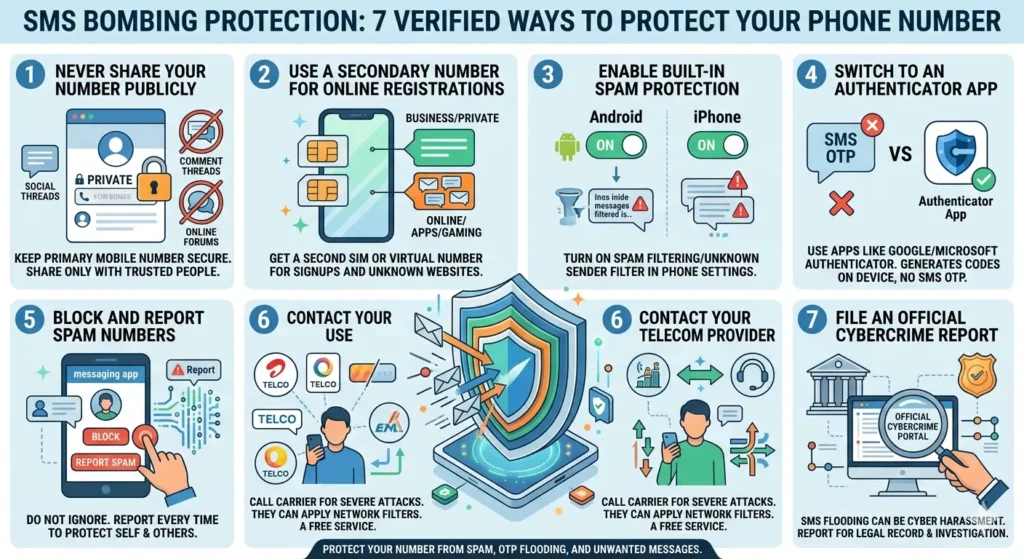
Many people unknowingly expose their phone numbers through public social media accounts. Review your privacy settings regularly and ensure your number is hidden from public view.
If possible:
Remove your phone number from public profiles.
Limit who can search for you using your number.
Disable unnecessary profile visibility.
Review connected applications regularly.
Reducing public exposure makes it more difficult for attackers to collect your information for SMS Bomber Risks or other spam-related activities.
Use Strong Account Security
Protecting your phone number also means protecting the accounts connected to it. Use unique passwords for every service and enable two-factor authentication whenever available. If a platform supports authentication apps or passkeys, consider using them instead of SMS verification for improved security.
Keeping your accounts secure reduces the likelihood of unauthorized access and helps prevent attackers from abusing your phone number for repeated verification requests.
Watch for Suspicious SMS Activity
Unexpected verification messages are often the first warning sign that someone is attempting to misuse your phone number. If you begin receiving multiple OTP messages that you did not request, avoid sharing those codes with anyone.
Common warning signs include:
Continuous OTP requests.
Verification messages from unknown websites.
Unexpected password reset notifications.
Multiple authentication texts within a short time.
SMS messages requesting personal information.
Recognizing these warning signs early can help you respond before the situation becomes more serious.
Protect Yourself from SMS Bombing
Although modern platforms have implemented better security controls, an SMS bomber may still generate large numbers of verification messages by exploiting poorly protected services. If you experience message flooding:
Do not respond to suspicious messages.
Contact your mobile carrier if the attack continues.
Report abusive activity to affected websites.
Enable spam filtering on your device.
Monitor important accounts for unusual login attempts.
Most attacks stop once the vulnerable services detect and block excessive requests.
Keep Your Number Private
Many online services ask for a phone number even when it is not required. Before providing your contact information, consider whether the service truly needs it. Limiting unnecessary exposure reduces the chances of receiving spam messages, phishing attempts, or becoming a target of an SMS bomber.
If possible, separate your personal and business phone numbers. This approach minimizes risk and makes it easier to manage unwanted communications if one number becomes publicly available.
Learn About Digital Security
Understanding how an SMS API Guide, rate limiting, CAPTCHA verification, and secure authentication systems work helps explain why reputable websites are becoming more resistant to SMS bombing attacks. Businesses continue improving their defenses to protect users from automated abuse, while individuals benefit from practicing good privacy habits and staying informed about modern cybersecurity threats.
FAQ's
Can an SMS bomber permanently damage my phone?
No. An SMS bomber generally floods your device with messages or OTP requests, but it does not physically damage your phone.
Should I change my phone number after an SMS bombing attack?
Not necessarily. In many cases, reporting the abuse, enabling spam protection, and securing your accounts are sufficient.
Can I prevent SMS bombing completely?
No solution is guaranteed, but limiting where you share your phone number, strengthening account security, and using trusted services greatly reduce the risk.
Why do websites ask for my phone number?
Most legitimate websites use phone numbers for account verification, password recovery, and security alerts. Always verify that the website is trustworthy before sharing your information.
Conclusion
Protecting your phone number online is an essential part of digital security. Since an SMS bomber often depends on publicly available phone numbers and automated verification systems, limiting where you share your contact information is one of the most effective ways to reduce risk. By reviewing your privacy settings, securing your online accounts, recognizing suspicious SMS activity, and following safe online practices, you can better protect yourself from spam, phishing, and SMS bombing attacks while maintaining greater control over your personal information.

Comments
Post a Comment