SMS Gateways
How SMS Gateways Work: Complete Beginner Guide
SMS communication has become a core part of modern digital services. From banking alerts and delivery notifications to one-time passwords (OTPs), businesses rely on SMS gateways to send messages quickly and securely. If you've been learning about an SMS bomber, understanding how SMS gateways work is equally important because these systems are responsible for delivering legitimate messages while preventing abuse. This beginner-friendly guide explains the SMS delivery process, SMS APIs, mobile networks, and message routing to help you understand how text messages travel from an application to a user's phone.
What Is an SMS Gateway?
An SMS gateway is a service that connects software applications with mobile network operators, allowing businesses to send and receive text messages without using a physical mobile phone. Instead of manually sending SMS messages, companies integrate their websites or applications with an SMS gateway using an API.
For example, when you request an OTP while logging into an online account, the website sends a request to an SMS gateway. The gateway processes the request and forwards the message to the appropriate mobile carrier, which then delivers it to your phone.
SMS gateways are widely used for:
OTP verification
Banking notifications
Appointment reminders
Marketing campaigns
Delivery updates
Customer support alerts
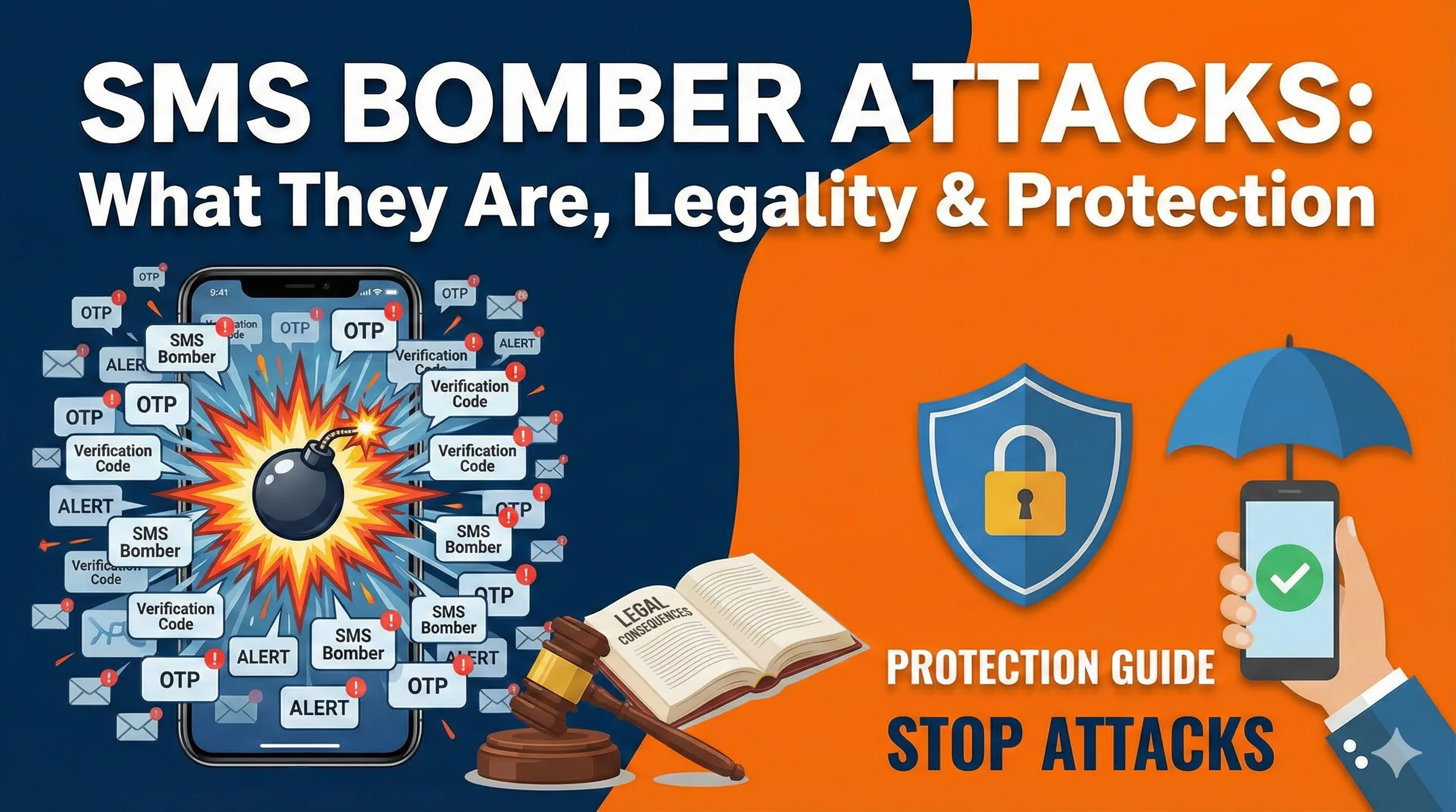
Unlike an SMS bomber, which attempts to overload messaging systems through repeated requests, legitimate SMS gateways include security controls that help ensure reliable and authorized message delivery.
SMS Delivery Process
Understanding the SMS delivery process helps explain why messages usually arrive within seconds and why businesses invest heavily in reliable messaging infrastructure.
The process begins when a user performs an action that requires an SMS notification, such as creating an account or requesting a password reset. The website or mobile application sends this request to its SMS gateway through an API. The gateway validates the request, checks security rules, and determines the best mobile network for delivery.
Once verified, the gateway forwards the message to the recipient's mobile operator. The operator then sends the SMS through its cellular network until it reaches the recipient's device. If the phone is temporarily unavailable, the network stores the message and delivers it once the device reconnects.
A typical SMS delivery follows these steps:
User requests an SMS.
Application generates the message.
SMS API sends the request.
SMS gateway validates the request.
Mobile carrier receives the message.
Cellular network delivers the SMS.
Delivery status is returned to the application.
This automated workflow enables millions of messages to be delivered every day with high speed and reliability.
Understanding SMS APIs
An SMS API (Application Programming Interface) allows software applications to communicate directly with an SMS gateway. Instead of sending text messages manually, developers use APIs to automate messaging from websites, mobile apps, and enterprise software.
When a user clicks "Send OTP" or "Verify Phone Number," the application sends an API request containing information such as the recipient's phone number, message content, authentication credentials, and delivery options. The SMS gateway processes the request and forwards it to the correct mobile operator.
Modern SMS APIs provide many useful features, including:
Secure authentication using API keys.
Delivery reports.
Message scheduling.
Bulk messaging support.
International SMS delivery.
Number validation.
Error reporting.
Traffic monitoring.
Developers also implement authentication, encryption, and SMS API Guide best practices to protect these interfaces from unauthorized access and automated abuse.

How Mobile Networks Deliver SMS
Mobile networks play a critical role in the SMS delivery process. Every mobile phone connects to a carrier such as a national telecom operator through nearby cellular towers. Once the SMS gateway forwards a message to the correct carrier, the mobile network becomes responsible for final delivery.
The carrier identifies the recipient's phone, checks whether it is currently connected to the network, and routes the message accordingly. If the phone is switched off or outside network coverage, the message is temporarily stored in the carrier's messaging center until the device reconnects.
Modern mobile operators maintain extensive infrastructure designed to provide reliable SMS communication while filtering suspicious or abusive traffic. Many carriers also monitor unusual messaging behavior to reduce spam, phishing, and large-scale automated requests associated with SMS Bomber Risks.
Message Routing Explained
Message routing refers to the path an SMS follows from the sender to the recipient. SMS gateways determine the most efficient route by analyzing the destination country, mobile operator, delivery costs, and network availability.
For domestic messages, routing is usually straightforward because the gateway communicates directly with local mobile carriers. International SMS delivery is more complex and may involve multiple interconnected operators before reaching the destination network.
Reliable routing provides several benefits:
Faster message delivery.
Higher delivery success rates.
Reduced network congestion.
Improved international coverage.
Better delivery reporting.
Increased messaging reliability.
Advanced routing systems automatically switch to alternative carrier connections if one network experiences delays or outages, helping businesses maintain uninterrupted communication.
SMS Gateway Security
Security is one of the most important responsibilities of an SMS gateway. Without proper protection, attackers could exploit messaging systems to generate excessive verification requests or fraudulent traffic.
Modern gateways protect their infrastructure using multiple layers of security, including API authentication, encrypted communication, request validation, traffic monitoring, and Rate Limiting Explained techniques. These mechanisms help distinguish legitimate users from automated scripts while preventing abuse.
Many providers also deploy CAPTCHA verification, behavioral analysis, IP reputation filtering, and fraud detection systems to reduce the effectiveness of automated attacks and protect both businesses and end users.
Why Businesses Use SMS Gateways
Organizations choose SMS gateways because they provide reliable, scalable, and secure communication with customers. Whether sending appointment reminders, payment confirmations, security alerts, or promotional campaigns, gateways automate message delivery without requiring manual intervention.
Key advantages include:
Fast global message delivery.
Easy integration with websites and applications.
Real-time delivery reports.
High reliability.
Scalable messaging infrastructure.
Strong security controls.
Cost-effective communication.
These benefits make SMS gateways an essential part of modern digital services across industries including banking, healthcare, e-commerce, education, and logistics.
Best Practices for Secure SMS Communication
Businesses and developers should follow established security practices to keep messaging systems protected and maintain reliable service.
Recommended practices include:
Secure API credentials and rotate them regularly.
Enable request authentication.
Apply rate limiting to all messaging endpoints.
Validate phone numbers before sending messages.
Monitor unusual traffic patterns.
Encrypt sensitive communications.
Review delivery logs regularly.
Keep messaging software updated.
Following these practices strengthens messaging infrastructure and reduces the risk of misuse.
Frequently Asked Questions
What is an SMS gateway?
An SMS gateway is a platform that enables applications to send and receive text messages through mobile network operators.
How does an SMS gateway send messages?
It receives a request through an SMS API, validates it, routes the message to the correct mobile carrier, and delivers it to the recipient's phone.
What is message routing?
Message routing is the process of selecting the most efficient path for an SMS to travel from the sender to the recipient through one or more mobile networks.
Why are SMS APIs important?
SMS APIs allow developers to automate text messaging for OTP verification, notifications, customer communication, and other business functions.
How do SMS gateways prevent abuse?
Modern gateways use authentication, encryption, traffic monitoring, CAPTCHA, and OTP Security Guide principles such as rate limiting and request validation to block unauthorized or excessive messaging.
Conclusion
SMS gateways are the backbone of modern text messaging services, enabling businesses to deliver OTPs, alerts, reminders, and notifications quickly and securely. Understanding the SMS delivery process, SMS APIs, mobile networks, and message routing provides valuable insight into how legitimate messaging systems operate. While searches about an SMS bomber often focus on message flooding, learning how secure SMS gateways function highlights the importance of authentication, monitoring, and rate limiting in protecting both users and organizations.

Comments
Post a Comment